
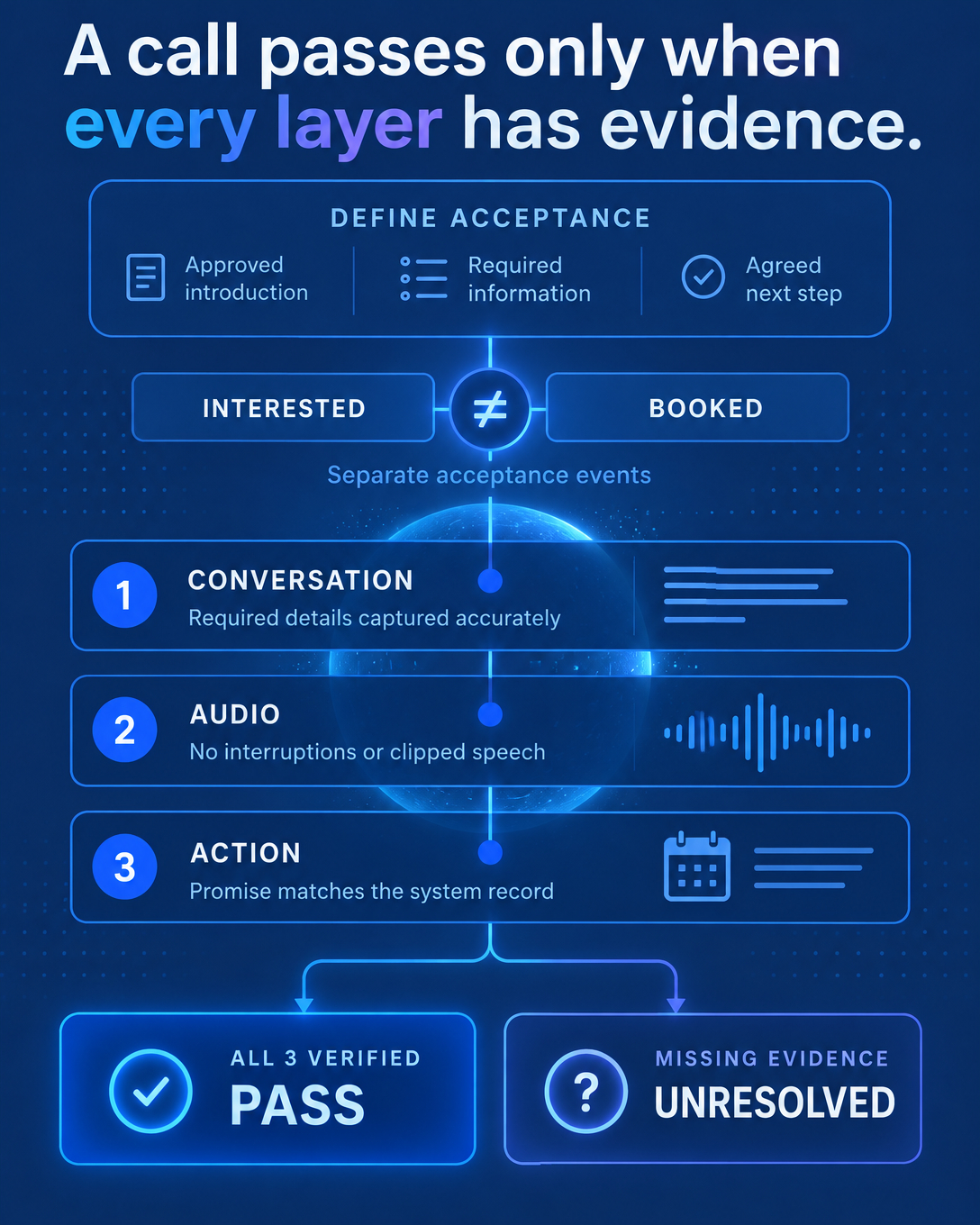
When a prospect returns a missed call, use the contact history you already have to pick up where the conversation stopped. If the caller match is uncertain, confirm it with the caller before you rely on it.
In practice, that depends on four pieces of context being visible when the call connects, plus a clear plan for calls where nothing matches.
The four things to know before the greeting
A useful callback opens with what the business already knows. Before anyone speaks, the person or AI answering should be able to see:
The original reason for contact. Why we reached out, and what offer or question was on the table.
The latest actual outcome. Voicemail left, conversation held, pricing sent, objection raised. Record what happened in plain terms, without inflating it.
The agreed next action. A demo slot, a quote follow-up, a document to review. If something was promised, the call starts from that promise.
The named owner. The rep or team responsible for the next step, so the caller can be routed or the handoff explained clearly.
With those four in view, the caller hears continuity. Without them, the call starts from zero and the prospect has to explain why they're on the line.
Confirm before you rely on a match
Phone numbers get shared, forwarded and reassigned, so a caller ID match is a strong hint and still needs care. When the match is clear, use it. When it's uncertain, ask a light confirming question before discussing specifics, such as “Am I speaking with Dana from Northside Dental?” This protects the caller's privacy and keeps the conversation accurate.
When no match is available, say so plainly: “I don't have a record tied to this number yet. Could you tell me who you spoke with or what it was about?” Then capture the caller's name, company, reason for calling and best callback time. Avoid telling the caller the company never contacted them. A missing record often means the history lives somewhere else, such as a rep's mobile, a different line or a lead source that never reached the CRM.
That last case comes up often. In one Reddit discussion, a business owner describes leads coming in from six different places and the need to pull them into one CRM. When intake is scattered like that, callbacks arrive without context.
An illustrative callback
This example is illustrative and does not describe a specific customer.
On Tuesday, an outbound call about appointment scheduling reaches a clinic manager's voicemail. The record shows the reason for contact, the voicemail outcome, a proposed 20-minute walkthrough as the next action and Sam as the owner. On Wednesday, the manager calls back.
The answering agent sees a contact match and opens with: “Thanks for calling back. We left you a message yesterday about scheduling for your clinic, and Sam suggested a short walkthrough. Would you like to book a time, or should I connect you with Sam?” The manager picks Thursday at 10. If a calendar connection is configured, the slot can be booked during the call. If not, the request is captured for Sam to confirm.
Callbacks end in different places. Some callers want a quick answer, some want to opt out and some turn out to be someone other than the person we tried to reach. Each is a valid outcome, and each should be recorded accurately.
How Vantara handles callbacks
In Vantara, inbound callbacks can come in on the same caller-facing number used for outreach, or on a dedicated number where one is configured. Where a contact matches, caller context is available to the AI or human answering. From there, the workspace profile, CTA and supported booking and handoff rules shape what happens next.
A few dependencies matter. Calendar booking and CRM updates rely on configured connections and the right permissions. Recordings, transcripts and notes depend on capture being available for that call.
For broader context on the category, this LinkedIn post on AI voice agents and conversational automation is worth a read.
FAQs
What if the caller's number matches more than one contact?
Ask a short confirming question, such as name or company, before using any history. Treat the match as unconfirmed until the caller verifies it.
Does caller context require a CRM connection?
CRM and calendar features depend on configured connections and permissions. Without a CRM connection, the available context is narrower, and the agent can still capture useful details for the owner to follow up on.
Will every callback have a recording or transcript?
Recordings, transcripts and notes depend on capture availability for each call. Where they're available, they give the owner a clear record of what was said and agreed.
If you'd like to hear how a callback would sound with your own outreach setup, book a short demo. We'll walk through your numbers, connections and handoff rules together.