
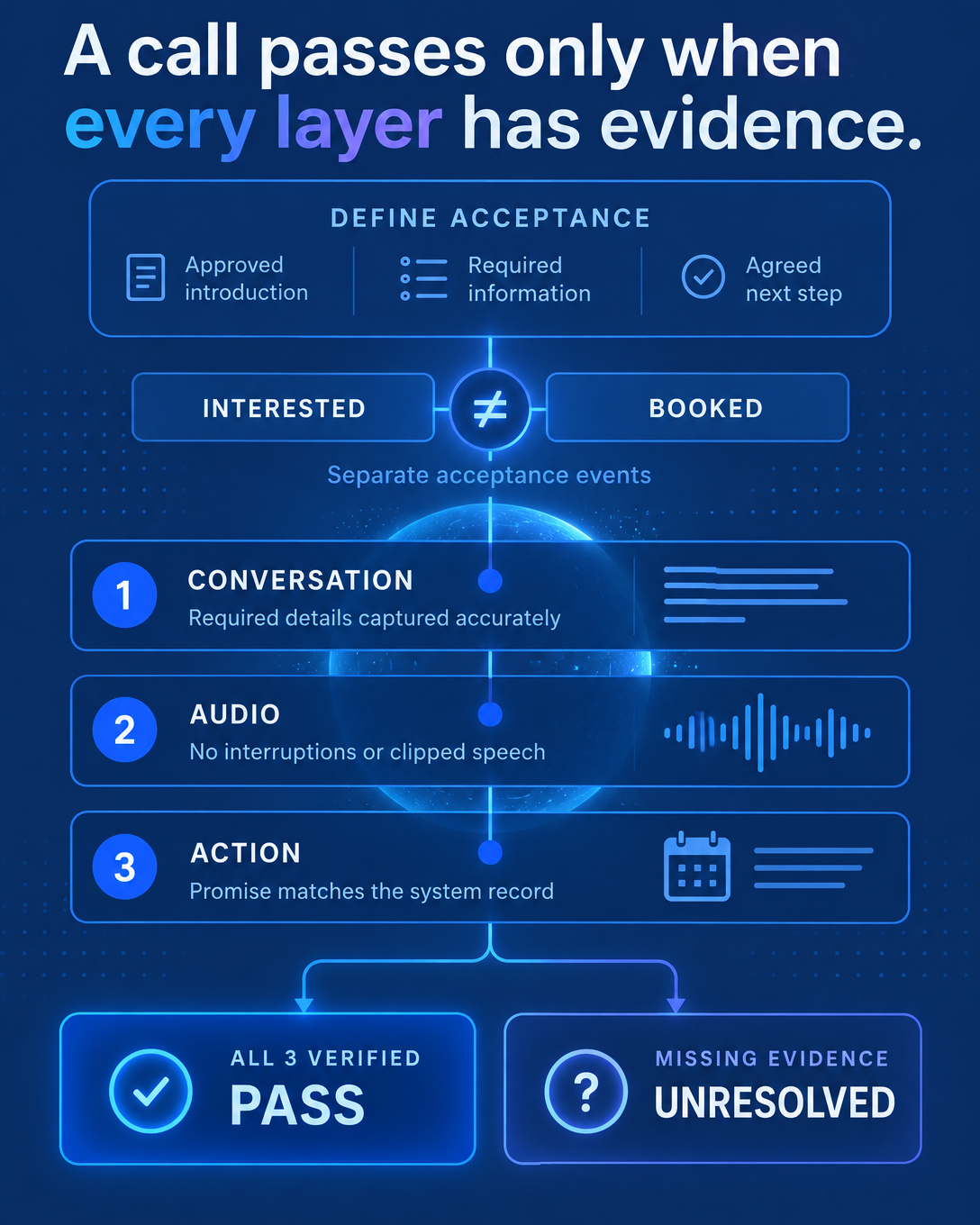
The short answer: automated follow-ups sound less robotic when they carry forward the actual conversation. Before a message goes out, check that it reaches the right person at the right company, keeps any conditional commitment exactly as the buyer said it, and proposes one specific next step. Wording still matters. But if a message gets the facts of the last conversation wrong, it will probably read as automated however warm the tone is.
Why Tone Tuning Often Falls Short
When follow-ups get called robotic, the usual fix is to change the wording: add first names, soften the openers, drop the formal phrases. Those edits can help. They do little when the message ignores what the buyer said, uses the wrong company name, or repeats a pitch the buyer already answered.
Wording changes how a message sounds. Context decides whether it is accurate, and accuracy is something the buyer can check against their own memory of the call.
What to Carry Forward From the Conversation
The right person and company. Confirm the contact's name, role, company and deal stage before anything sends.
What was actually discussed. Mention the specific topic or open question, such as pricing, an integration or timing.
Conditional commitments, with the condition intact. If the buyer said “we would move forward if the integration works with our CRM,” keep the condition. Rewriting it as “you said you’re moving forward” changes the meaning.
One specific next step. A date, a document or a named person to bring in. Vague closers like “just circling back” give the buyer nothing to act on.
An Illustrative Before and After
This example is made up for illustration. It does not describe a real customer or result.
Context: On a call, a buyer at a logistics company said the pricing looked workable, but they would only move forward if the tool integrates with their existing CRM. They asked for a technical review with their operations lead, Dana, the following week.
Before: “Hi Sam, just circling back on our conversation! We help teams like yours save time on calls. Do you have 15 minutes this week for a quick discovery call?”
After: “Hi Sam, thanks for your time on Tuesday. You mentioned the pricing looks workable and that moving forward depends on the CRM integration. How about a 30-minute technical review with Dana next Wednesday or Thursday to walk through it? I can send the integration documentation beforehand if that helps.”
The second version is plainer. It also reflects what was said, keeps the condition intact and suggests a concrete next step with the right person.
A Practical Pre-Send Checklist
Are the contact's name, role and company correct?
Does the message mention at least one specific point from the last conversation?
Is every conditional statement kept the way the buyer put it?
Does it avoid repeating a pitch or an objection that was already handled?
Is the next step specific: a time, a document or a person?
Can someone trace each detail back to a recorded conversation, a note or a CRM field?
Has someone approved the message, if your process requires review?
Where the Follow-Up Gets Its Facts
Wording usually gets better once the system sending the message has an accurate record of what happened. When the call lives in one tool, the notes sit in another and the sequence runs from a template, details can get lost along the way. So it often makes sense to fix capture and the data source before you rewrite the copy.
Our company, Vantara, supports approved contextual follow-up based on contact history, along with supported, configured CRM and calendar workflows. Recordings, transcripts and summaries are available when capture is enabled. What you can use also depends on permissions, your plan and whether your connections are set up and ready. Bookings and CRM updates follow your configuration. They are not automatic or guaranteed, so your team decides what happens after a call.
FAQ
Does personalization mean using the buyer’s first name?
A first name is a courtesy. Useful personalization speaks to the buyer’s situation: what they asked, what they’re weighing and what was agreed.
Should automated follow-ups be reviewed before sending?
That depends on your process. A review step makes sense for messages that mention pricing, commitments or conditions, since those details are the easiest to misstate.
What if there is no recording or transcript?
Work from the notes and CRM fields you have, and only include details you can verify. If capture was not enabled, don’t write as if the message is based on a full record of the call.
If you’d like to see how contextual follow-up could work with your own setup, book a short demo with Vantara and bring one of your current sequences to walk through.
Sources
Qualitative public discussion: r/CRMSoftware thread, “How do you automate follow-ups without making them sound robotic?”
Product information: Vantara, ai-vantara.com